
Custom Trade Show Displays Arizona
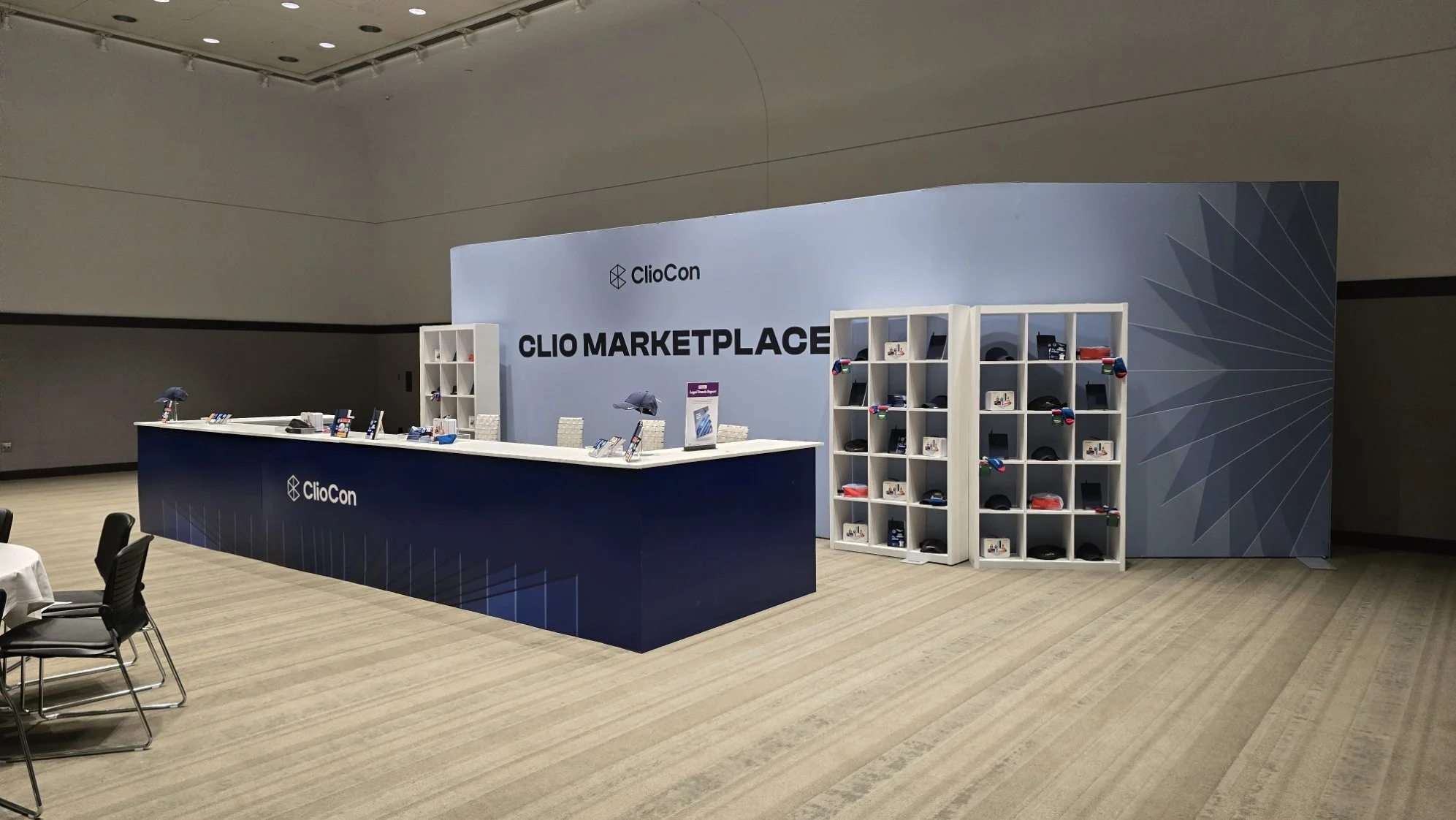
Your booth has a few seconds to earn a second look. In Phoenix, Scottsdale, Tucson or Mesa, that means standing out from dozens of neighboring exhibits, many of them assembled from the same catalog frames.
Next Level Displays designs, fabricates, ships and installs custom trade show displays for exhibitors nationwide, including Arizona brands and companies traveling in for a show. We have more than 20 years in the exhibit industry and 500+ custom builds behind us. Everything described below happens under one roof, so the booth that gets approved is the booth that arrives.
A Booth Built Around One Brand, Not a Catalog
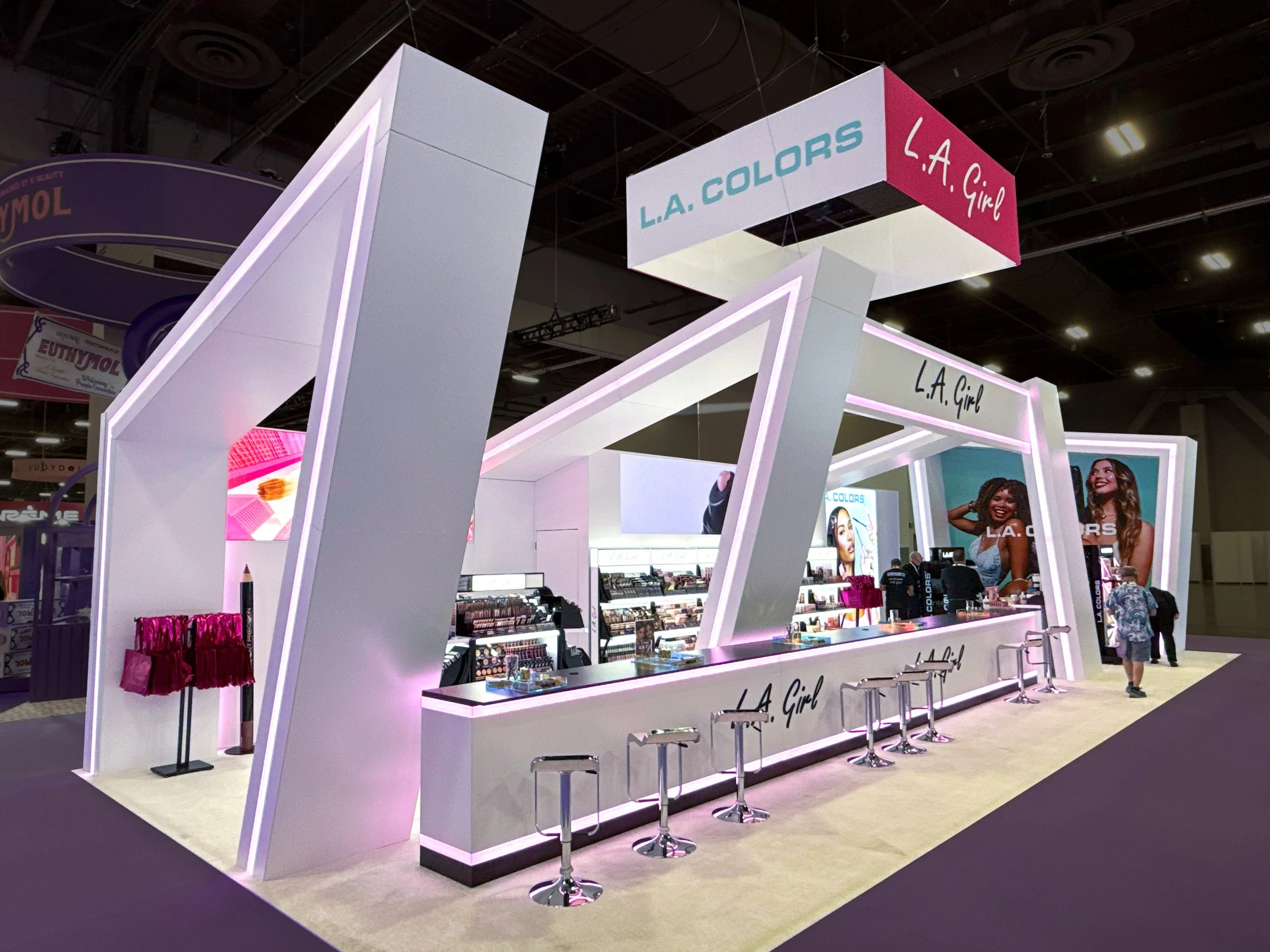
A custom exhibit starts from your brand, your goals and your exact floor space. Layout, materials, graphics, lighting and structure are all developed for you, with no pre-set configuration to work around.
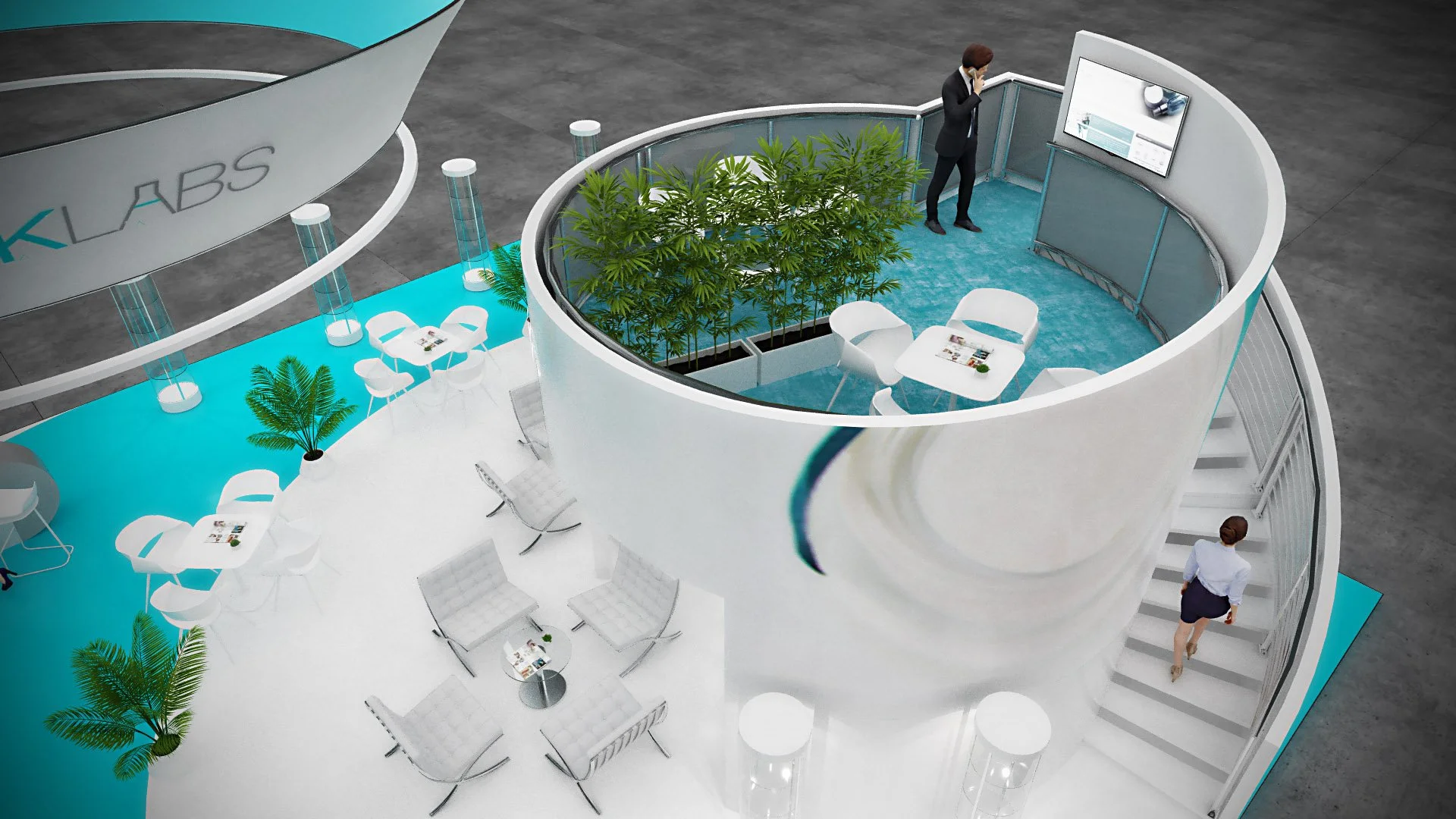
That matters when you need something a kit can’t do. A curved product wall, a branded demo counter, a hanging sign sized to the show’s rules, a double-deck meeting space: these come from fabrication, not assembly. Our work has covered technology, aerospace, healthcare and diagnostics, beauty and personal care, consumer products, and industrial and automotive brands, including Rocket Lab, JetBrains, Tetra Pak and Theragun.
Where Your Display Gets Made: One Shop, Start to Finish
Many exhibit companies outsource part of the build. We keep the main stages in-house:
Design and 3D visualization. You see renders and detailed spec drawings before any material is cut, so the layout and sightlines are settled on screen.
Engineering. CAD modeling helps ensure the exhibit is structurally sound and code-compliant, and that it holds up through repeated installs.
CNC fabrication. CNC routers and precision cutting tools turn approved designs into panels, millwork and structural components.
Wood, metal and acrylic work. Our shop combines all three, which gives you freedom with form and finish.
Large-format printing. Graphics, backlit panels and fabric structures are printed in-house, so color and finish match the structure.
Lighting and AV integration. Screens, lighting and media are planned into the exhibit rather than added at the last minute.
Our 40,000-square-foot production house is where this work happens. You are also welcome to visit and see the shop floor yourself.
Choosing the Right Layout for Your Arizona Show Floor
Booth size and shape should follow what you need to do on the floor. Before you pick a footprint, answer these questions:
Are you demonstrating, meeting or collecting leads? A demo-heavy exhibit needs open counter space. A meeting-driven one needs a quieter enclosed area.
How many sides face an aisle? An inline booth has one open face and must work hard in a narrow frontage. An island is visible from every direction, so the exhibit needs a strong look from all sides.
What does the show allow? Height limits, hanging sign rules and sightline requirements vary by show and booth type. Check your exhibitor manual early, because these rules can shape the design.
Will this exhibit travel? Many Arizona companies also exhibit in places like Las Vegas and Los Angeles. If so, we can engineer the exhibit to be reconfigured for different footprints.
If a full custom build isn’t right for a particular show, we also offer custom rental exhibits and modular designs, which can be tailored to your space.
Designing for Phoenix, Scottsdale, Tucson and Beyond
Arizona hosts trade shows and conventions in several cities. Phoenix draws many of the larger events, and the Phoenix Convention Center is a common venue. WestWorld of Scottsdale, the Tucson Convention Center and the Mesa Convention Center host their own shows. Each has its own layout and loading conditions.
The practical point is that your show’s exhibitor service kit controls most of the logistics. It typically covers freight handling, rigging, electrical orders and insurance requirements, and it sets the deadlines. Requirements differ from show to show, so we build them into the plan from the start. That means we ask for the service kit early and coordinate the exhibit’s design, crating and install schedule around it.
From Our Shop to Your Booth Space
A well-built exhibit can still fail on a bad install. Your dedicated project manager coordinates:
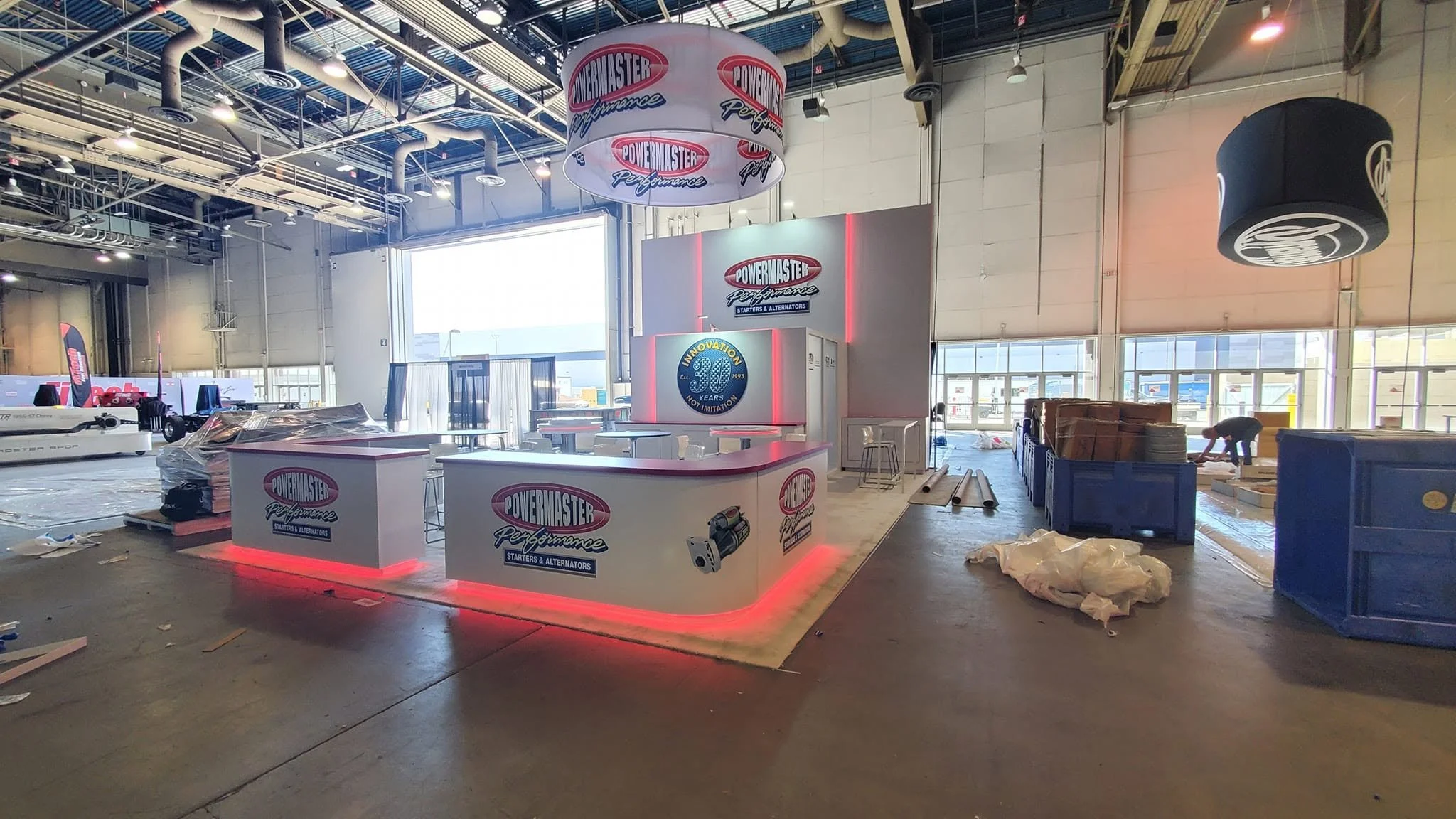
Crating and freight. We manage crating and transportation so your exhibit arrives ready to set up.
Venue coordination. We handle the paperwork and scheduling that venues and show contractors require.
Installation and dismantle. Our nationwide install and dismantle crews apply the same quality-control standards in every city.
Storage and post-show support. We can store and refurbish your exhibit between shows, so you aren’t paying to warehouse it elsewhere or scrambling when the next show approaches.
One project manager follows your project from kickoff to wrap-up, so you have a single person to call.
Timeline and Budget: What to Expect
A typical custom exhibit takes 10 to 14 weeks from concept approval to crating. Rush builds of 6 to 8 weeks are possible, but earlier is better, and we recommend starting the conversation three to four months before your show.
Our quotes are itemized, so you can see what each part costs rather than one bundled number. A quote covers design renders, engineering, fabrication, graphics, lighting, AV integration, freight, installation and dismantle. Because design, fabrication, logistics and installation are all handled in-house, you aren’t paying third-party markups on those stages.
With a custom build, you own every panel, fixture and graphic. If you already have an exhibit, ask us about refreshing, reskinning or modularizing it. Reusing existing assets can reduce the cost of a new build without losing visual impact.
Questions Arizona Exhibitors Ask
-
It is a booth designed and built for one company’s brand, goals and booth space, rather than adapted from a generic kit.
-
No. Next Level Displays is headquartered in Brea, California, and serves exhibitors across the USA through nationwide installation and dismantle crews.
-
Fabrication happens in our shop, where CNC cutting turns wood, metal and acrylic into finished components. Construction is the assembly of those components into the finished exhibit.
-
Renting makes sense if you are testing a new show, exhibit rarely, have a tight timeline or want to try a layout first. Buying makes sense if you will use the exhibit repeatedly and want to own it.
-
Tell us your show, your booth size and what you want the exhibit to accomplish. Our team will reply within one business day with ideas, a timeline and an itemized, all-inclusive quote.